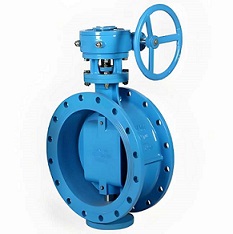
Double ECC Flange Butterfly Valve

A high-performance butterfly valve with a double-eccentric (offset) design, providing excellent sealing and durability for industrial applications requiring reliable flow control in challenging conditions.

View Technical Specs
DIN Resilient Seated NRS Gate Valve

Product Overview

The Double ECC Flange Butterfly Valve is engineered for superior performance in demanding industrial environments. Its double-eccentric design ensures that the disc is offset from the centerline of the shaft and the body seat, minimizing friction and wear during operation. This unique configuration allows the valve to achieve tight shut-off even at high pressures and temperatures.

With an integral flange connection, this valve offers a robust and leak-proof installation, making it ideal for applications in the oil and gas, power generation, chemical processing, and water treatment industries. It is available with manual, gearbox, or automated actuators to suit various operational requirements.

Constructed with a durable body and precision-machined components, the Double ECC Flange Butterfly Valve delivers long service life and reliable performance, even in harsh operating conditions. Its design complies with international standards such as ISO 5752 and API 609, ensuring quality and compatibility with global systems.

Key Features & Benefits

Double-Eccentric Design

Minimizes friction and wear, allowing for smooth operation and extended service life, even at high pressures.

Excellent Sealing Performance

Achieves tight shut-off (ISO 5208 Class IV or higher) with minimal torque, ensuring reliable flow control in critical applications.

Integral Flange Connection

Provides a robust and leak-proof installation, suitable for high-pressure and high-temperature applications.

High-Pressure Rating

Designed to handle pressures up to PN40 or Class 600, making it suitable for demanding industrial applications.

Wide Temperature Range

Capable of operating in temperatures from -40°F to 600°F (-40°C to 315°C), depending on the seat material.

ISO/API Compliance

Fully compliant with ISO 5752 and API 609 standards, ensuring quality, reliability, and compatibility with global systems.

Technical Specifications

Basic Parameters

Parameter Specification Range
Nominal Diameter (DN/NPS) DN50 ~ DN2000 (2" ~ 80")
Nominal Pressure (PN/Class) PN10, PN16, PN25, PN40
Class 150, Class 300, Class 600
Operating Temperature -40°F ~ 600°F (-40°C ~ 315°C)
Applicable Media Water, Oil, Gas, Steam, Chemicals, Corrosive Fluids
Sealing Class ISO 5208 Class IV, V, or VI (depending on seat material)

Material Specifications

Component Material Options Standards/Features
Valve Body Ductile Iron, Carbon Steel, Stainless Steel EN-GJS-400-15, ASTM A216 WCB, ASTM A351 CF8/CF8M, Integral Flange
Disc Stainless Steel AISI 304/316, Precision-Machined for Optimal Sealing
Seat Metal-to-Metal, PTFE, PEEK, Inconel Overlay High-Temperature and Corrosion Resistance, Tight Shut-Off
Shaft Stainless Steel AISI 304/316, Anti-Corrosive Design
Actuator Manual Lever, Gearbox, Electric, Pneumatic, Hydraulic Suitable for Various Operational Requirements

Standards & Compliance

  • Design Standards: ISO 5752, API 609
  • Flange Standards: ISO 7005-1, ANSI B16.5 Class 150/300/600
  • Testing Standards: ISO 5208, API 598, Hydrostatic and Leakage Testing
  • Certifications: CE, ISO 9001, API 609

Working Principle

The Double ECC Flange Butterfly Valve operates using a rotating disc with a double-eccentric design:

  1. Double Eccentricity: The disc is offset from the centerline of the shaft and the body seat. This design minimizes contact between the disc and seat during operation, reducing friction and wear.
  2. Opening Process: Rotating the actuator (lever, gearbox, or automated) turns the disc to a parallel position with the flow direction, allowing media to pass through the valve with minimal resistance.
  3. Closing Process: Rotating the actuator in the opposite direction turns the disc to a perpendicular position. The eccentric design ensures that the disc contacts the seat evenly, creating a tight seal and shutting off flow.
  4. Sealing Assurance: The double-eccentric design, combined with advanced seat materials (such as metal-to-metal or PTFE), provides reliable sealing performance even at high pressures and temperatures, ensuring leak-free operation in critical applications.

Application Areas

Oil & Gas

Upstream, midstream, and downstream applications for oil, gas, and water injection systems.

Power Generation

Boiler feedwater, cooling water, and flue gas desulfurization systems in power plants.

Chemical Processing

Handling of corrosive and abrasive chemicals in chemical plants and refineries.

Water Treatment

Municipal water supply, wastewater treatment, and desalination plants.

Installation & Maintenance

Installation Guidelines

  • Inspect the valve for damage and confirm it is in the closed position before installation. Clean the pipeline flanges to remove any debris or contaminants.
  • Position the valve between the two pipeline flanges, ensuring the valve body is centered and the flange bolt holes align correctly with the pipeline flange holes.
  • Install gaskets between the valve flanges and the pipeline flanges (if not already integrated) and secure with flange bolts.
  • Tighten the flange bolts evenly in a crisscross pattern to avoid uneven pressure on the valve body and ensure a proper, leak-free seal.
  • Ensure the actuator is mounted correctly and operating in the proper direction (consult the arrow on the valve body for flow direction and actuator for open/close direction).
  • Conduct hydrostatic testing (1.5×PN) and leakage testing after installation before commissioning the system.

Maintenance Recommendations

  • Regularly inspect the seat for signs of wear, cracking, or deformation. Replace the seat if necessary to maintain optimal sealing performance.
  • Lubricate the gearbox (if equipped) annually or as per manufacturer recommendations to ensure smooth operation and prevent corrosion.
  • Check the shaft and disc for corrosion or buildup. Clean and lubricate the shaft bearings as needed to maintain smooth rotation.
  • Inspect the actuator and its connections for looseness or damage. Tighten or replace components as required to ensure reliable operation.
  • For long-term shutdown, flush the valve with clean water to remove any residual media and prevent seat hardening or corrosion.

Frequently Asked Questions (FAQ)

Q: What is the difference between a double-eccentric and triple-eccentric butterfly valve?

A: A double-eccentric valve has two offsets (disc from shaft and seat), minimizing friction and wear. A triple-eccentric valve adds a third offset (disc cone angle), enabling metal-to-metal sealing and higher temperature/pressure capabilities. Double-eccentric valves are typically more cost-effective for moderate applications, while triple-eccentric valves are designed for extreme conditions.

Q: Can the Double ECC Flange Butterfly Valve be used for throttling applications?

A: Yes, this valve can be used for throttling applications within a limited flow range (typically 10-60% open). However, for precise flow control, consider a control valve with a suitable actuator and flow characteristic.

Q: What seat material should I choose for high-temperature applications?

A: For high-temperature applications (above 400°F / 204°C), consider metal-to-metal seating or advanced materials such as PEEK or Inconel overlay. Contact our technical team for assistance in selecting the right seat material for your specific temperature and media requirements.

Q: Is the Double ECC Flange Butterfly Valve suitable for vacuum applications?

A: While it can handle some vacuum conditions, standard double-eccentric butterfly valves are primarily designed for positive pressure applications. For high-vacuum service, specialized valves with enhanced sealing features may be required. Please consult with our sales team for specific vacuum ratings.

Need Custom Solutions?

Our engineering team can customize Double ECC Flange Butterfly Valves to meet your specific pressure, temperature, and media requirements. Contact us today for a personalized quote.

Contact Our Technical Team